mirror of
https://github.com/NohamR/knowledge-kit.git
synced 2026-05-25 12:27:15 +00:00

173 lines
4.5 KiB
Markdown
173 lines
4.5 KiB
Markdown
# 看透构造方法
|
||
|
||
## 构造方法
|
||
|
||
* new 方法的内部就是先调用 alloc 方法,再调用 init 方法
|
||
* alloc 方法:那个类接受 alloc 消息,那么该方法返回该接受类的对象,并把对象返回
|
||
* init 方法:是1个对象方法,作用:初始化对象
|
||
* 创建对象的步骤:先使用 alloc 创建1个对象,再使用 init 初始化这个对象,才可以使用这个对象
|
||
* 使用1个未被初始化的对象是很危险的
|
||
* init 方法:作用:初始化对象,为对象赋初始值,叫做构造方法
|
||
|
||
## 重写init构造方法
|
||
* 如果想创建出来的对象的属性值不是默认的初始化值,则需要重写 init 方法
|
||
* 重写 init 方法的规范:
|
||
* 必须要先调用父类的 init 方法(因为当前类初始化就是通过\`\[父类init\]\`去初始化),然后将返回值赋值给self
|
||
* 调用 init 方法有可能会失败,如果失败直接返回nil
|
||
* 判断父类是否初始化成功。如果 `self != nil`,则代表初始化成功
|
||
* 如果初始化成功就去初始化当前对象的属性
|
||
* 最后返回 self
|
||
|
||
#### 解惑:
|
||
|
||
1. 为什么要调用父类的 init 方法?
|
||
1. 当前类有 isa 指针,当前类的 isa 指针赋值是通过父类的 init 方法赋值的。
|
||
2. 需要保证当前对象的父类属性同时被初始化
|
||
2. 重写 init 方法的规范:
|
||
|
||
```
|
||
-(instancetype)init{
|
||
if (self = [super init]) {
|
||
//todo:自定义属性的初始化
|
||
}
|
||
return self;
|
||
}
|
||
```
|
||
|
||
```
|
||
//Person
|
||
|
||
#import <Foundation/Foundation.h>
|
||
|
||
@interface Person : NSObject
|
||
@property NSString* name;
|
||
@property int age;
|
||
|
||
-(void)sayHi;
|
||
|
||
@end
|
||
|
||
#import "Person.h"
|
||
@implementation Person
|
||
|
||
-(void)sayHi{
|
||
NSLog(@"Hi");
|
||
}
|
||
|
||
-(instancetype)init{
|
||
self = [super init];
|
||
if (self) {
|
||
self.name = @"杭城小刘";
|
||
self.age = 22;
|
||
}
|
||
return self;
|
||
}
|
||
@end
|
||
|
||
|
||
//测试
|
||
|
||
Person *p1 = [[Person alloc] init]; //p1.name = "杭城小刘",p1.age =22;
|
||
Person *p2 = [Person new]; //p2.name = "杭城小刘",p2.age =22;
|
||
```
|
||
|
||
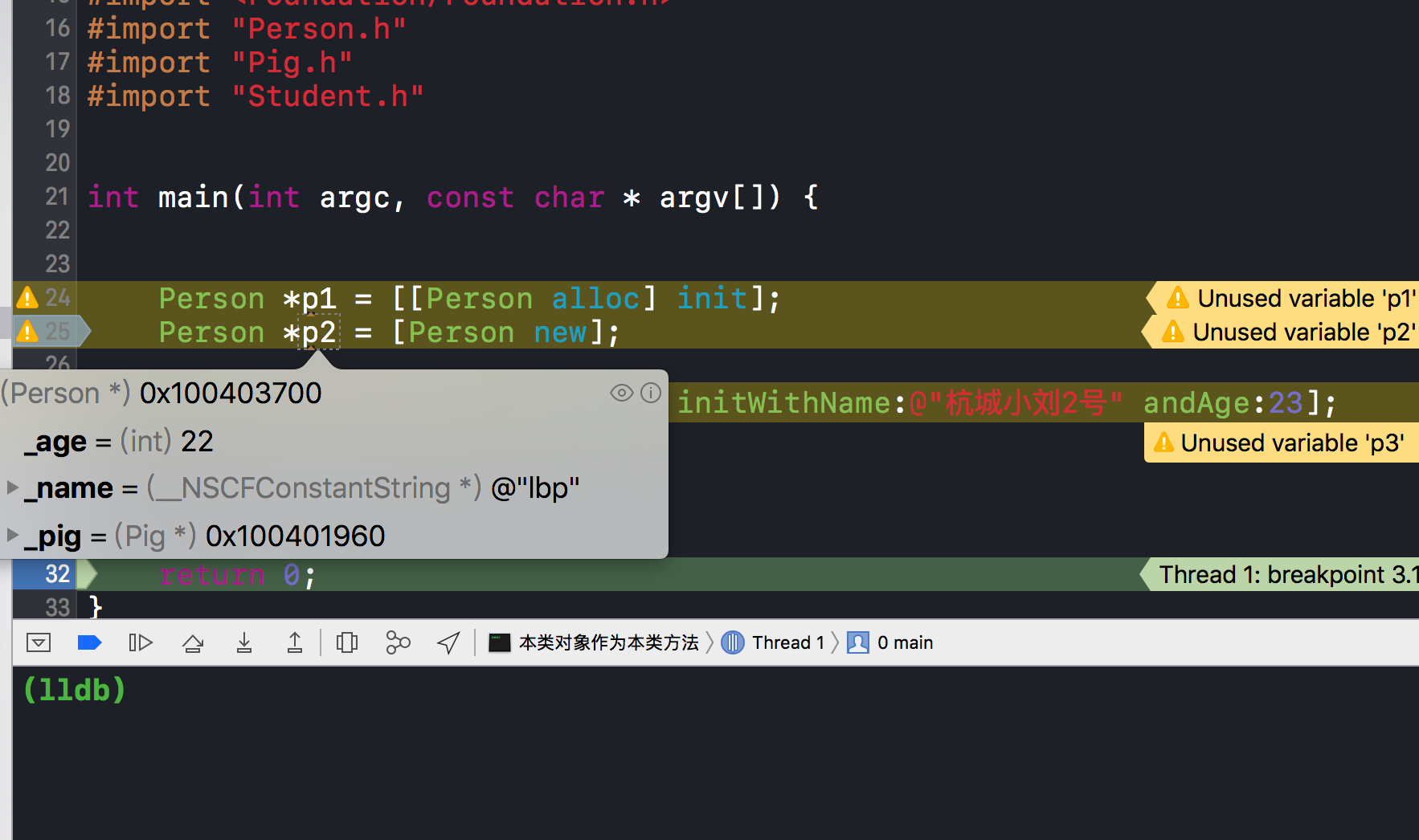
如果2个类的关系为组合关系,且它的一个属性是另一个类的对象,那么当该类初始化的时候默认它的属性为 nil,那么如何初始化?
|
||
|
||
```
|
||
-(instancetype)init{
|
||
self = [super init];
|
||
if (self) {
|
||
self.name = @"lbp";
|
||
self.age = 22;
|
||
self.pig = [[Pig alloc] init];
|
||
}
|
||
return self;
|
||
}
|
||
|
||
//测试
|
||
Person *p1 = [[Person alloc] init]; //p1.dog != nil
|
||
```
|
||
|
||
## 自定义构造方法
|
||
|
||
* 现状:虽然每次双肩的对象的属性值不是默认的,但是每次初始化的对象的值都是一样的。
|
||
|
||
* 需求:每次实例化的对象的属性值由调用者决定
|
||
|
||
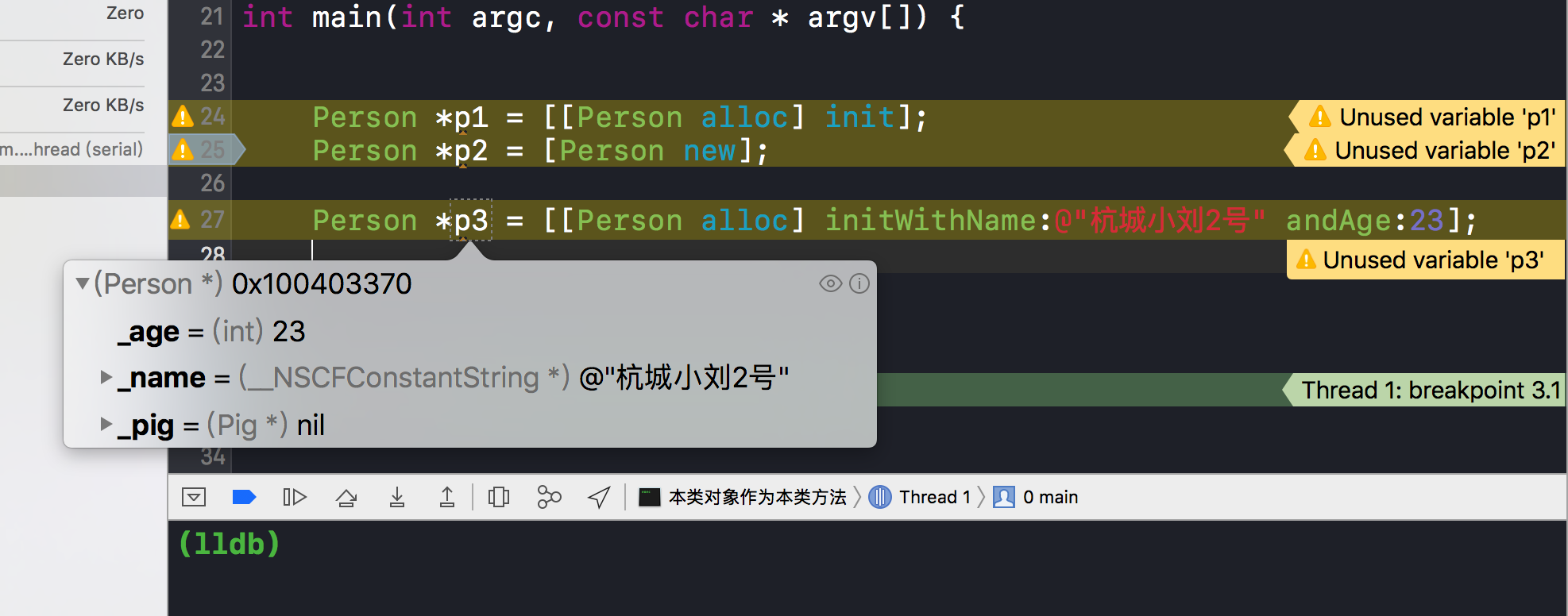
* 解决办法:自定义构造方法
|
||
|
||
* 自定义构造方法规范:
|
||
|
||
* 自定义构造方法的返回值为 instancetype
|
||
|
||
* 方法的命名必须以 initWith 开头
|
||
|
||
* 方法的实现类似 init 的实现
|
||
|
||
**注意:此时不能使用 new 来调用。(因为 new 的实现是先 alloc 再 init ,默认 init 的实现是给属性赋默认值)**
|
||
|
||
```
|
||
-(instancetype)initWithName:(NSString *)name andAge:(int)age{
|
||
if (self = [super init]) {
|
||
self.name = name;
|
||
self.age = age;
|
||
}
|
||
return self;
|
||
}
|
||
```
|
||
|
||
```
|
||
//Person
|
||
#import <Foundation/Foundation.h>
|
||
@interface Person : NSObject
|
||
@property NSString* name;
|
||
@property int age;
|
||
|
||
-(instancetype)initWithName:(NSString *)name andAge:(int)age;
|
||
@end
|
||
|
||
#import "Person.h"
|
||
@implementation Person
|
||
|
||
-(instancetype)init{
|
||
self = [super init];
|
||
if (self) {
|
||
self.name = @"lbp";
|
||
self.age = 22;
|
||
}
|
||
return self;
|
||
}
|
||
|
||
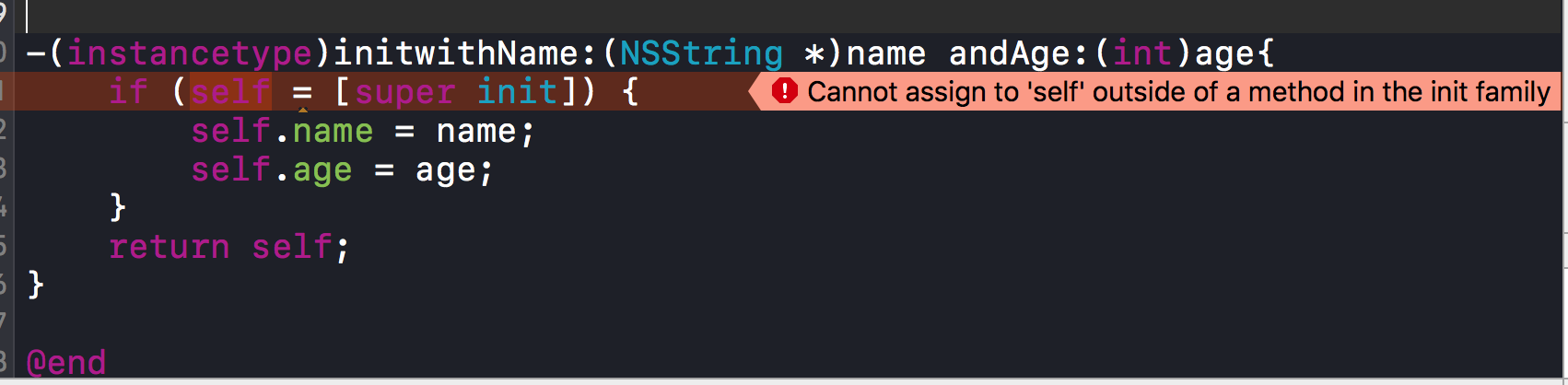
//不能在构造方法之外给self赋值
|
||
//编译器认为只有以initWith开头的方法是构造方法
|
||
|
||
-(instancetype)initWithName:(NSString *)name andAge:(int)age{
|
||
if (self = [super init]) {
|
||
self.name = name;
|
||
self.age = age;
|
||
}
|
||
return self;
|
||
}
|
||
|
||
@end
|
||
|
||
|
||
//测试
|
||
Person *p1 = [[Person alloc] init];
|
||
Person *p2 = [Person new];
|
||
Person *p3 = [[Person alloc] initWithName:@"杭城小刘2号" andAge:23];
|
||
```
|
||
|
||
|
||
|
||
|
||
|
||
|
||
关于“自定义构造方法必须以 initWith 开头”做个实验
|
||
|
||
|
||
|
||
报错信息很明显:不能在构造方法之外给 self 赋值
|
||
|
||
因为,编译器认为只有以 initWith 开头的方法是构造方法
|