mirror of
https://github.com/NohamR/knowledge-kit.git
synced 2026-05-25 12:27:15 +00:00

303 lines
12 KiB
Markdown
303 lines
12 KiB
Markdown
# 状态模式
|
||
|
||
状态模式一般用来实现状态机,而状态机常用在游戏、工作流引擎等系统开发中。不过,状态机的实现方式有多种,除了状态模式,比较常用的还有分支逻辑法和查表法。今天,我们就详细讲讲这几种实现方式
|
||
|
||
## 什么是状态机?
|
||
状态机也叫有限状态机,英文翻译是 Finite State Machine,缩写为 FSM,简称为状态机。状态机有3 个组成部分:状态(State)、事件(Event)、动作(Action)。其中,事件也称为转移条件(Transition Condition)。事件触发状态的转移及动作的执行。不过,动作不是必须的,也可能只转移状态,不执行任何动作
|
||
|
||
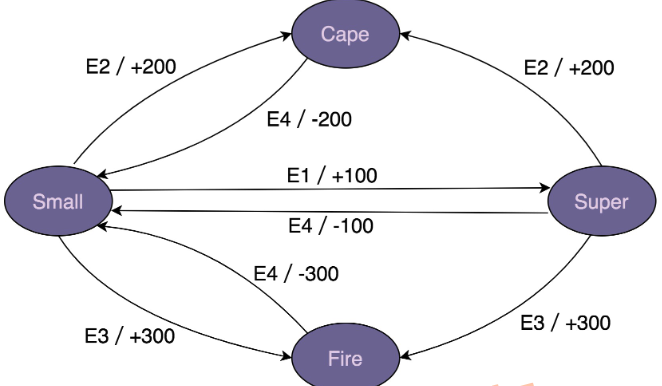
超级马里奥”游戏不知道你玩过没有?在游戏中,马里奥可以变身为多种形态,比如小马里奥(Small Mario)、超级马里奥(Super Mario)、火焰马里奥(Fire Mario)、斗篷马里奥(Cape Mario)等等。在不同的游戏情节下,各个形态会互相转化,并相应的增减积分。比如,初始形态是小马里奥,吃了蘑菇之后就会变成超级马里奥,并且增加 100 积分。
|
||
|
||
实际上,马里奥形态的转变就是一个状态机。其中,马里奥的不同形态就是状态机中的“状态”,游戏情节(比如吃了蘑菇)就是状态机中的“事件”,加减积分就是状态机中的“动作”。比如,吃蘑菇这个事件,会触发状态的转移:从小马里奥转移到超级马里奥,以及触发动作的执行(增加 100 积分)
|
||
|
||
|
||
|
||
```
|
||
public enum State {
|
||
SMALL(0),
|
||
SUPER(1),
|
||
FIRE(2),
|
||
CAPE(3);
|
||
private int value;
|
||
private State(int value) {
|
||
this.value = value;
|
||
}
|
||
public int getValue() {
|
||
return this.value;
|
||
}
|
||
}
|
||
|
||
public class MarioStateMachine {
|
||
private int score;
|
||
private State currentState;
|
||
public MarioStateMachine() {
|
||
this.score = 0;
|
||
this.currentState = State.SMALL;
|
||
}
|
||
public void obtainMushRoom() {
|
||
//TODO
|
||
}
|
||
public void obtainCape() {
|
||
//TODO
|
||
}
|
||
public void obtainFireFlower() {
|
||
//TODO
|
||
}
|
||
public void meetMonster() {
|
||
//TODO
|
||
}
|
||
public int getScore() {
|
||
return this.score;
|
||
}
|
||
public State getCurrentState() {
|
||
return this.currentState;
|
||
}
|
||
}
|
||
|
||
public class ApplicationDemo {
|
||
public static void main(String[] args) {
|
||
MarioStateMachine mario = new MarioStateMachine();
|
||
mario.obtainMushRoom();
|
||
int score = mario.getScore();
|
||
State state = mario.getCurrentState();
|
||
System.out.println("mario score: " + score + "; state: " + state);
|
||
}
|
||
}
|
||
```
|
||
|
||
## 实现
|
||
|
||
### 方法1:分支逻辑法
|
||
对于如何实现状态机,我总结了三种方式。其中,最简单直接的实现方式是,参照状态转移图,将每一个状态转移,原模原样地直译成代码。这样编写的代码会包含大量的 if-else 或 switch-case 分支判断逻辑,甚至是嵌套的分支判断逻辑,所以,我把这种方法暂且命名为分支逻辑法
|
||
```
|
||
public class MarioStateMachine {
|
||
private int score;
|
||
private State currentState;
|
||
public MarioStateMachine() {
|
||
this.score = 0;
|
||
this.currentState = State.SMALL;
|
||
}
|
||
public void obtainMushRoom() {
|
||
if (currentState.equals(State.SMALL)) {
|
||
this.currentState = State.SUPER;
|
||
this.score += 100;
|
||
}
|
||
}
|
||
public void obtainCape() {
|
||
if (currentState.equals(State.SMALL) || currentState.equals(State.SUPER) )
|
||
this.currentState = State.CAPE;
|
||
this.score += 200;
|
||
}
|
||
}
|
||
public void obtainFireFlower() {
|
||
if (currentState.equals(State.SMALL) || currentState.equals(State.SUPER) )
|
||
this.currentState = State.FIRE;
|
||
this.score += 300;
|
||
}
|
||
}
|
||
public void meetMonster() {
|
||
if (currentState.equals(State.SUPER)) {
|
||
this.currentState = State.SMALL;
|
||
this.score -= 100;
|
||
return;
|
||
}
|
||
if (currentState.equals(State.CAPE)) {
|
||
this.currentState = State.SMALL;
|
||
this.score -= 200;
|
||
return;
|
||
}
|
||
if (currentState.equals(State.FIRE)) {
|
||
this.currentState = State.SMALL;
|
||
this.score -= 300;
|
||
return;
|
||
}
|
||
}
|
||
public int getScore() {
|
||
return this.score;
|
||
}
|
||
public State getCurrentState() {
|
||
return this.currentState;
|
||
}
|
||
}
|
||
```
|
||
对于简单的状态机来说,分支逻辑这种实现方式是可以接受的。但是,对于复杂的状态机来说,这种实现方式极易漏写或者错写某个状态转移。除此之外,代码中充斥着大量的 if-else 或者 switch-case 分支判断逻辑,可读性和可维护性都很差。如果哪天修改了状态机中的某个状态转移,我们要在冗长的分支逻辑中找到对应的代码进行修改,很容易改错,引入 bug。
|
||
|
||
### 方法2:查表法
|
||
上面这种实现方法有点类似 hard code,对于复杂的状态机来说不适用,而状态机的第二种实现方式查表法,就更加合适了。接下来,我们就一块儿来看下,如何利用查表法来补全骨架代码。
|
||
|
||
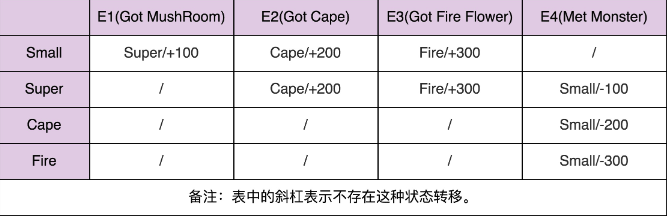
实际上,除了用状态转移图来表示之外,状态机还可以用二维表来表示,如下所示。在这个二维表中,第一维表示当前状态,第二维表示事件,值表示当前状态经过事件之后,转移到的新状态及其执行的动作
|
||
|
||
相对于分支逻辑的实现方式,查表法的代码实现更加清晰,可读性和可维护性更好。当修改状态机时,我们只需要修改 transitionTable 和 actionTable 两个二维数组即可。实际上,如果我们把这两个二维数组存储在配置文件中,当需要修改状态机时,我们甚至可以不修改任何代码,只需要修改配置文件就可以了
|
||
|
||
```
|
||
public enum Event {
|
||
GOT_MUSHROOM(0),
|
||
GOT_CAPE(1),
|
||
GOT_FIRE(2),
|
||
MET_MONSTER(3);
|
||
private int value;
|
||
private Event(int value) {
|
||
this.value = value;
|
||
}
|
||
public int getValue() {
|
||
return this.value;
|
||
}
|
||
}
|
||
public class MarioStateMachine {
|
||
private int score;
|
||
private State currentState;
|
||
private static final State[][] transitionTable = {
|
||
{SUPER, CAPE, FIRE, SMALL},
|
||
{SUPER, CAPE, FIRE, SMALL},
|
||
{CAPE, CAPE, CAPE, SMALL},
|
||
{FIRE, FIRE, FIRE, SMALL}
|
||
};
|
||
private static final int[][] actionTable = {
|
||
{+100, +200, +300, +0},
|
||
{+0, +200, +300, -100},
|
||
{+0, +0, +0, -200},
|
||
{+0, +0, +0, -300}
|
||
};
|
||
public MarioStateMachine() {
|
||
this.score = 0;
|
||
this.currentState = State.SMALL;
|
||
}
|
||
public void obtainMushRoom() {
|
||
executeEvent(Event.GOT_MUSHROOM);
|
||
}
|
||
public void obtainCape() {
|
||
executeEvent(Event.GOT_CAPE);
|
||
}
|
||
public void obtainFireFlower() {
|
||
executeEvent(Event.GOT_FIRE);
|
||
}
|
||
public void meetMonster() {
|
||
executeEvent(Event.MET_MONSTER);
|
||
}
|
||
private void executeEvent(Event event) {
|
||
int stateValue = currentState.getValue();
|
||
int eventValue = event.getValue();
|
||
this.currentState = transitionTable[stateValue][eventValue];
|
||
this.score = actionTable[stateValue][eventValue];
|
||
}
|
||
public int getScore() {
|
||
return this.score;
|
||
}
|
||
public State getCurrentState() {
|
||
return this.currentState;
|
||
}
|
||
}
|
||
```
|
||
### 方法3: 状态模式
|
||
在查表法的代码实现中,事件触发的动作只是简单的积分加减,所以,我们用一个 int 类型的二维数组 actionTable 就能表示,二维数组中的值表示积分的加减值。但是,如果要执行的动作并非这么简单,而是一系列复杂的逻辑操作(比如加减积分、写数据库,还有可能发送消息通知等等),我们就没法用如此简单的二维数组来表示了。这也就是说,查表法的实现方式有一定局限性
|
||
|
||
虽然分支逻辑的实现方式不存在这个问题,但它又存在前面讲到的其他问题,比如分支判断逻辑较多,导致代码可读性和可维护性不好等。实际上,针对分支逻辑法存在的问题,我们可以使用状态模式来解决。
|
||
|
||
状态模式通过将事件触发的状态转移和动作执行,拆分到不同的状态类中,来避免分支判断逻辑。我们还是结合代码来理解这句话
|
||
|
||
其中,IMario 是状态的接口,定义了所有的事件。SmallMario、SuperMario、CapeMario、FireMario 是 IMario 接口的实现类,分别对应状态机中的 4 个状态。原来所有的状态转移和动作执行的代码逻辑,都集中在 MarioStateMachine 类中,现在,这些代码逻辑被分散到了这 4 个状态类中
|
||
|
||
```
|
||
public interface IMario { //所有状态类的接口
|
||
State getName();
|
||
//以下是定义的事件
|
||
void obtainMushRoom();
|
||
void obtainCape();
|
||
void obtainFireFlower();
|
||
void meetMonster();
|
||
}
|
||
|
||
public class SmallMario implements IMario {
|
||
private MarioStateMachine stateMachine;
|
||
public SmallMario(MarioStateMachine stateMachine) {
|
||
this.stateMachine = stateMachine;
|
||
}
|
||
@Override
|
||
public State getName() {
|
||
return State.SMALL;
|
||
}
|
||
@Override
|
||
public void obtainMushRoom() {
|
||
stateMachine.setCurrentState(new SuperMario(stateMachine));
|
||
stateMachine.setScore(stateMachine.getScore() + 100);
|
||
}
|
||
@Override
|
||
public void obtainCape() {
|
||
stateMachine.setCurrentState(new CapeMario(stateMachine));
|
||
stateMachine.setScore(stateMachine.getScore() + 200);
|
||
}
|
||
@Override
|
||
public void obtainFireFlower() {
|
||
stateMachine.setCurrentState(new FireMario(stateMachine));
|
||
stateMachine.setScore(stateMachine.getScore() + 300);
|
||
}
|
||
@Override
|
||
public void meetMonster() {
|
||
// do nothing...
|
||
}
|
||
}
|
||
public class SuperMario implements IMario {
|
||
private MarioStateMachine stateMachine;
|
||
public SuperMario(MarioStateMachine stateMachine) {
|
||
this.stateMachine = stateMachine;
|
||
}
|
||
@Override
|
||
public State getName() {
|
||
return State.SUPER;
|
||
}
|
||
@Override
|
||
public void obtainMushRoom() {
|
||
// do nothing...
|
||
}
|
||
@Override
|
||
public void obtainCape() {
|
||
stateMachine.setCurrentState(new CapeMario(stateMachine));
|
||
stateMachine.setScore(stateMachine.getScore() + 200);
|
||
}
|
||
@Override
|
||
public void obtainFireFlower() {
|
||
stateMachine.setCurrentState(new FireMario(stateMachine));
|
||
stateMachine.setScore(stateMachine.getScore() + 300);
|
||
}
|
||
@Override
|
||
public void meetMonster() {
|
||
stateMachine.setCurrentState(new SmallMario(stateMachine));
|
||
stateMachine.setScore(stateMachine.getScore() - 100);
|
||
}
|
||
}
|
||
// 省略CapeMario、FireMario类...
|
||
public class MarioStateMachine {
|
||
private int score;
|
||
private IMario currentState; // 不再使用枚举来表示状态
|
||
public MarioStateMachine() {
|
||
this.score = 0;
|
||
this.currentState = new SmallMario(this);
|
||
}
|
||
public void obtainMushRoom() {
|
||
this.currentState.obtainMushRoom();
|
||
}
|
||
public void obtainCape() {
|
||
this.currentState.obtainCape();
|
||
}
|
||
public void obtainFireFlower() {
|
||
this.currentState.obtainFireFlower();
|
||
}
|
||
public void meetMonster() {
|
||
this.currentState.meetMonster();
|
||
}
|
||
public int getScore() {
|
||
return this.score;
|
||
}
|
||
public State getCurrentState() {
|
||
return this.currentState.getName();
|
||
}
|
||
public void setScore(int score) {
|
||
this.score = score;
|
||
}
|
||
public void setCurrentState(IMario currentState) {
|
||
this.currentState = currentState;
|
||
}
|
||
}
|
||
```
|
||
实际上,像游戏这种比较复杂的状态机,包含的状态比较多,我优先推荐使用查表法,而状态模式会引入非常多的状态类,会导致代码比较难维护。相反,像电商下单、外卖下单这种类型的状态机,它们的状态并不多,状态转移也比较简单,但事件触发执行的动作包含的业务逻辑可能会比较复杂,所以,更加推荐使用状态模式来实现
|
||
|